
An inclusive design framework for novice students doing bioengineering and rehabilitation design
Article Sidebar
Article Details

This work is licensed under a Creative Commons Attribution-NonCommercial-NoDerivatives 4.0 International License.
Downloads
Main Article Content
Abstract
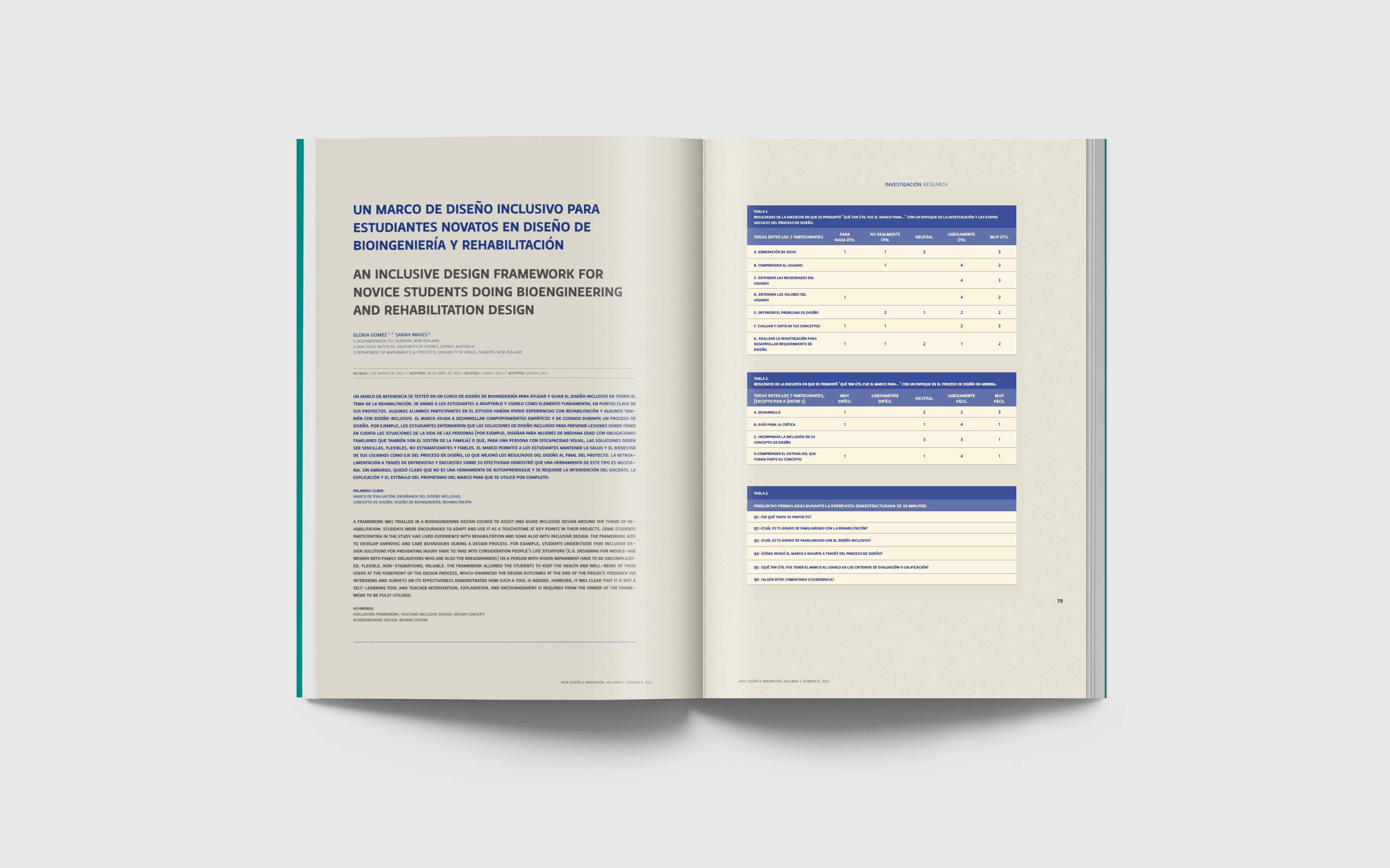
A framework was trialled in a bioengineering design course to assist and guide inclusive design around the theme of rehabilitation. Students were encouraged to adapt and use it as a touchstone at key points in their projects. Some students participating in the study had lived experience with rehabilitation and some also with inclusive design. The framework aids to develop empathic and care behaviours during a design process. For example, students understood that inclusive design solutions for preventing injury have to take into consideration people’s life situations (e.g. Designing for middle-age women with family obligations who are also the breadwinners) or a person with vision impairment have to be uncomplicated, flexible, non-stigmatising, reliable. The framework allowed the students to keep the health and wellbeing of their users at the forefront of the design process, which enhanced the design outcomes at the end of the project. Feedback via interviews and surveys on its effectiveness demonstrated how such a tool is needed. However, it was clear that it is not a self-learning tool and teacher intervention, explanation, and encouragement is required from the owner of the framework to be fully utilised.