Design and Artificial Intelligence: Ethical, Plural, and Situated Perspectives
Vol. 11 No. 13 (2026)
Artificial intelligence (AI) is rapidly transforming creative, educational, and research practices in the design field. However, these transformations unfold within unequal global frameworks in which certain perspectives, languages, and cultural traditions have gained greater visibility and influence than others. This special issue seeks to broaden the debate by incorporating critical, situated, and plural perspectives that help understand and reimagine the relationship between design and AI beyond dominant approaches.
Guest editors:
Ross Brisco, University of Strathclyde, United Kingdom
Marco Vinicio Ferruzca, Universidad Autónoma Metropolitana, Mexico
Valeria López Torres, North Carolina State University, United States
Andrés Téllez, North Carolina State University, United States

Training the Researchers of the Future. Emerging Practices in Design Schools
Vol. 10 No. 12 (2025)
Undergraduate research is making an increasingly significant contribution to the advancement of design knowledge. This special issue brings together articles based on degree projects that demonstrate academic excellence, disciplinary relevance, and potential professional and societal impact. It also invites educators to share the pedagogical experiences and theoretical and methodological approaches that have shaped research-led design education.
Editors:
Úrsula Bravo, Universidad del Desarrollo, Chile
Giovanna Danies, Universidad de los Andes, Colombia
Trinidad Lazcano, Universidad del Desarrollo, Chile
Design and longevity: New perspectives, and challenges
Vol. 9 No. 11 (2025)
Longevity is reshaping the challenges and opportunities of design. This special issue explores how human-centered and systemic design approaches can enhance well-being, autonomy, and social participation in increasingly long-lived societies. The contributions examine adaptable solutions that support people across different life stages, strengthen intergenerational connections, and promote sustainability, advancing a more inclusive and resilient future.
Guest editors:
Mariluz Soto, Universidad del Desarrollo, Chile.
Sheng-Hung Lee, Massachusetts Institute of Technology, EEUU.
Melanie Sarantou, Kyushu University, Japón.
Paula Melo Signerez, Delft University of Technology, Piases Bajos.
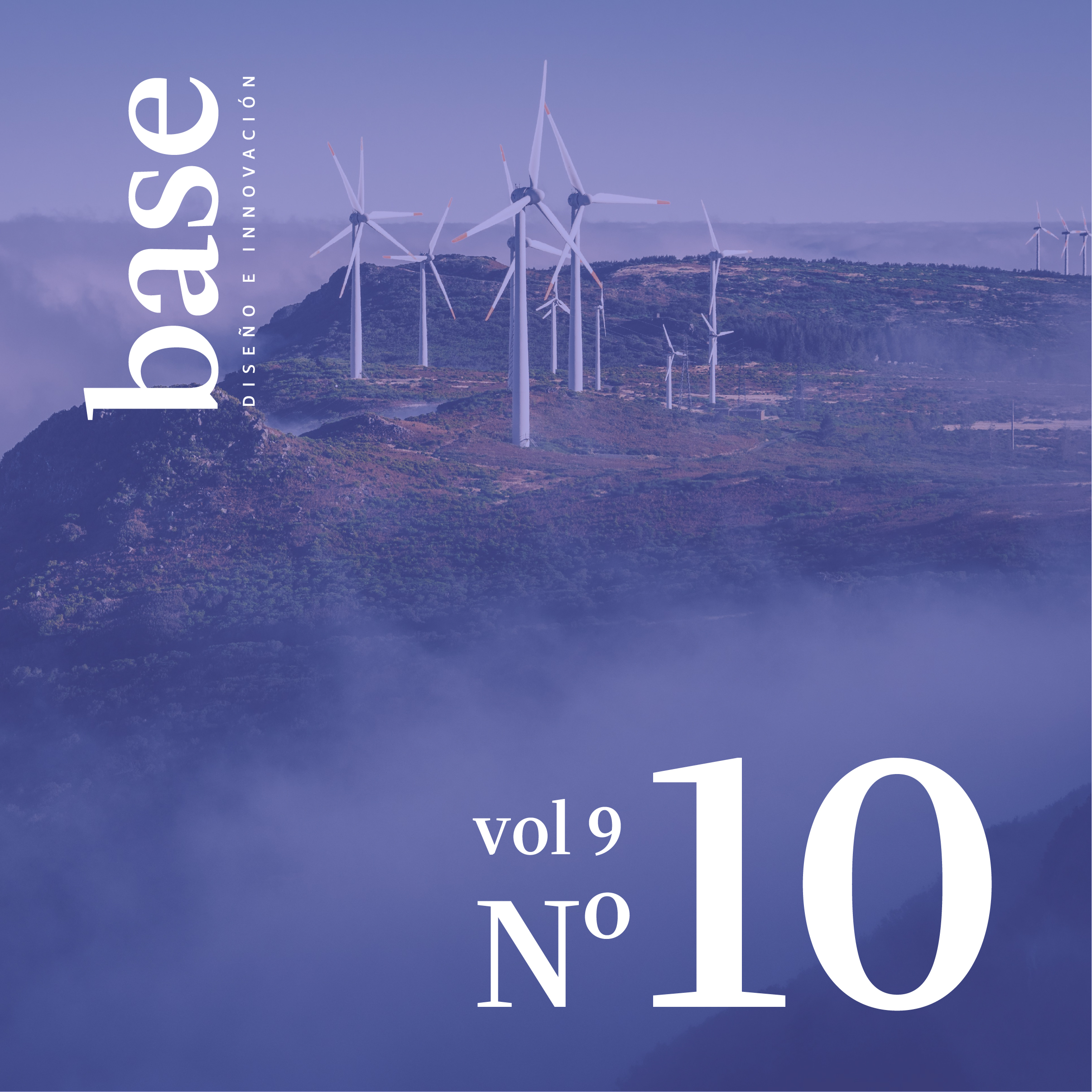
Disruptive sustainability: society, innovation and futures
Vol. 9 No. 10 (2024)
Climate change calls for a fundamental shift toward more sustainable and equitable ways of producing and living. In this context, design can help accelerate the transition to sustainable futures by developing innovative and responsible solutions. This special issue examines the role of co-design, collaborative design networks, and strategic innovation in advancing sustainable, accessible, and socially just alternatives.
Guest editors:
Paulina Contreras, Universidad del Desarrollo, Chile
Ignacio Toledo, Universidad del Desarrollo, Chile
David Pérez, Lancaster University, England
Michael Stead, Lancaster University, England
Yekta Bakırlıoğlu, Lancaster University, England
A New Green Bauhaus from the Global South
Vol. 8 No. 9 (2023)
Climate change, the pandemic, and geopolitical tensions have exposed the need to rethink the role of design. A century after the founding of the Bauhaus, this special issue reflects on a New Green Bauhaus from the Global South, proposing new approaches to design education and practice centered on sustainability, life, and social inclusion. It explores how emerging technologies, including artificial intelligence, can support more responsible and equitable futures.
Guest editors:
Mauricio Novoa, Sydney University (WSU), Australia
Rodrigo Vargas, University of Valparaíso (UVC), Chile
Design for sustainable, humane, and smart cities
Vol. 8 No. 8 (2023)
Rapid urbanization has intensified social, economic, and environmental challenges, increasing the need for more sustainable, human-centered, and smart cities. In this context, design, together with digital technologies and renewable energy, contributes to solutions that enhance quality of life, foster inclusion, and improve urban services. This special issue brings together five studies that explore the contribution of design to creating more sustainable cities.
Guest Editors:
Marco Vinicio Ferruzca Navarro Universidad Autónoma Metropolitana, Mexico
Marco Aurelio Lobo Junior Centro Universitario IESB, Brazil
Emerging materials and [bio-design]
Vol. 7 No. 7 (2022)
The ecological crisis, the post-pandemic context, and geopolitical tensions have accelerated the search for more sustainable materials. In response, emerging materials design offers alternatives with lower environmental impact by integrating principles of the circular economy, biofabrication, and bio-inspired design. These innovations not only reduce ecological footprints but also create new user experiences. This issue brings together ten studies that explore these approaches and their contributions to contemporary design.
Guest Editors:
Jimena Alarcón, Universidad del Bío-Bío, Chile
Amilton Arruda, Universidade Federal Pernambuco, Brasil.
Design, health and wellbeing
Vol. 7 No. 6 (2022)
Complex notions, such as health and wellbeing find in design a vital process of integrating different actors and experiences. Design is the path to develop collaboratively innovative solutions to create or improve products, services and systems in healthcare and welfare. Design processes, such as design sprints form a collaborative way to integrate design thinking on healthcare environment and wellbeing. However, designers should improve their abilities to build on evidence-based research projects, with the understanding of the social complex system.
Guest editors:
Mariluz Soto, Universidad del Desarrollo, Chile.
Haian Xue, Delft University of Technology, Paises Bajos
Emmanuel Tsekleves, Lancaster University, Reino Unido
Design and global challenges
Vol. 6 No. 5 (2021)
Experts claim that the biological resources that the Earth generates in a year do not last more than eight months today. Furthermore, the effects of climate change will continue to increase in variety and intensity. But every crisis is an opportunity. If design is about performing actions to change existing situations for preferred ones, then the answer must come from design. Precisely, this issue of Base Design and Innovation seeks to advance in this line by making visible the role of design in addressing global challenges.