
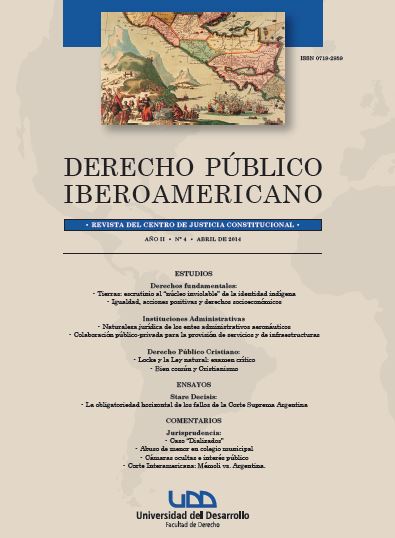
Keywords
property
indigenous peoples
positive discrimination
resettlement
historical debt
indigenous policy
Categories
How to Cite
Attribution 4.0 International CC BY 4.0
You are free to:
- Share — copy and redistribute the material in any medium or format for any purpose, even commercially.
- Adapt — remix, transform, and build upon the material for any purpose, even commercially.
- The licensor cannot revoke these freedoms as long as you follow the license terms.
Under the following terms:
- Attribution — You must give appropriate credit , provide a link to the license, and indicate if changes were made . You may do so in any reasonable manner, but not in any way that suggests the licensor endorses you or your use.
- No additional restrictions — You may not apply legal terms or technological measures that legally restrict others from doing anything the license permits.
Notices:
You do not have to comply with the license for elements of the material in the public domain or where your use is permitted by an applicable exception or limitation .
No warranties are given. The license may not give you all of the permissions necessary for your intended use. For example, other rights such as publicity, privacy, or moral rights may limit how you use the material.
Downloads
Abstract
This work analyzes the way in which indigenous lands are treated inlegislation and its critical role in the state’s regulatory scheme towards indigenous peoples. The article scrutinizes the paradigm according to which land constitute the main pillar of indigenous identity, as well as the regulatory and policy implications of the state’s duties of protection and restitution of indigenous lands that result from said paradigm. The article argues that even though land does have a fundamental role in indigenous identity, regulations and policies that focus almost exclusively on land must be carefully examined, as there are other elements critical to the preservation of indigenous identities, such as language.